
Blog
How to choose a baby name you can live with
Picking a baby name looks simple until everyone has an opinion. The names that last are the ones you can say every day, write on a form, and still like when the child is sixteen.
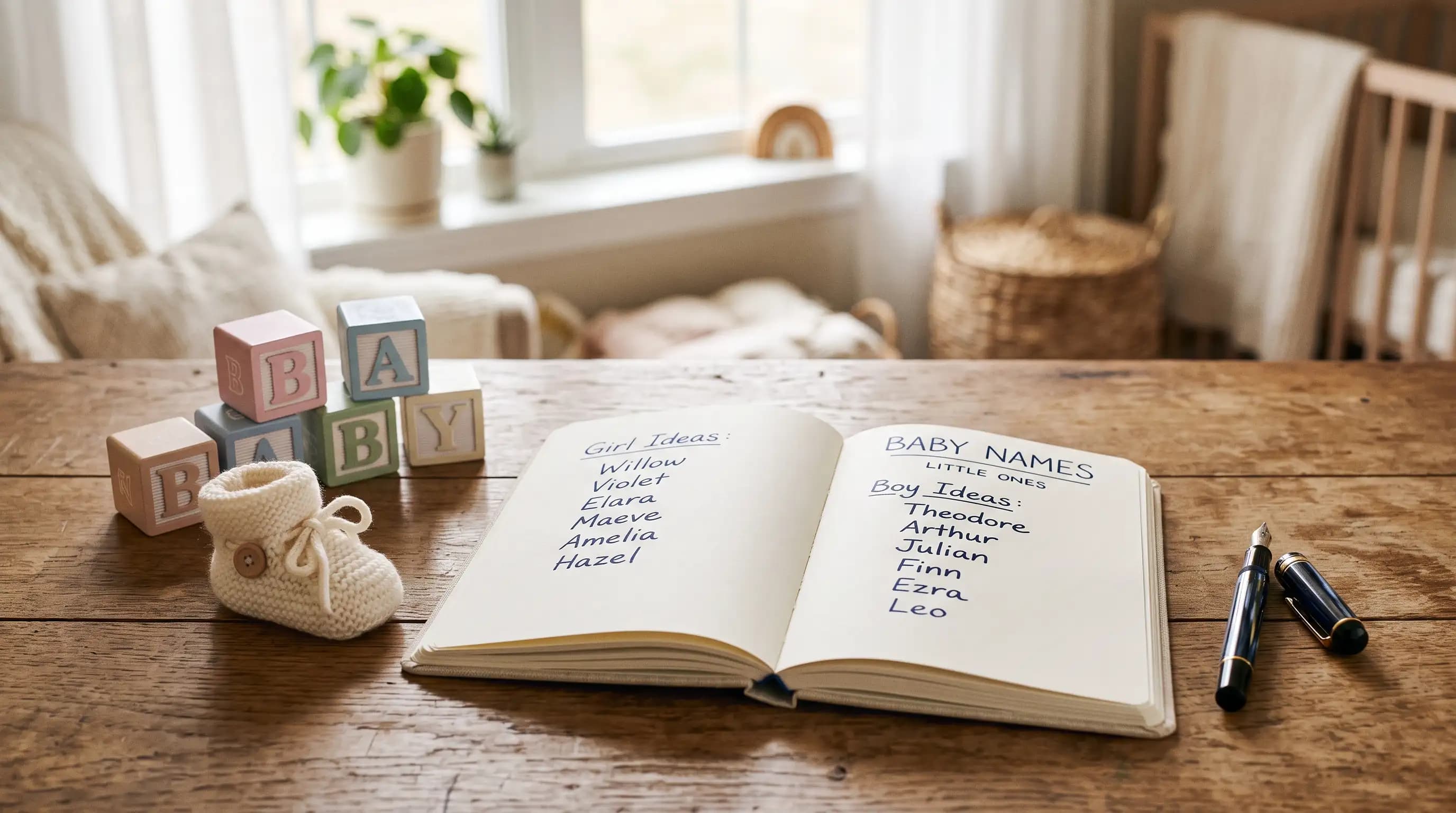
Say the first name with your last name. Picture a teacher reading it aloud. Picture a teenager signing an email. Keep a short list, sleep on it, and drop anything that fails those tests. Charts measure other people’s children. You are naming yours.
Start with the life, not the list
Most fights about names are fights about fear. One person fears the child will blend into a crowd. The other fears the child will spend life spelling a puzzle. Both fears are reasonable. Name them. Then set a rule: the name must pass both tests. Unique can still be simple. Simple can still feel like you.
Think about the rooms the name will enter. A small town school. A large city school. A bilingual home. A faith community with its own calendar of names. A military family that moves. None of these rooms rank names the same way. A name that feels bold in one place feels ordinary in another. That is not failure. That is context.
Write one sentence: “We want a name that ___.” Fill the blank with a real need, not a vibe word. Examples: is easy for grandparents to say. Honors a grandmother without copying her full name. Works in English and Spanish. Does not match three cousins. That sentence is your filter. Generators can wait until the filter exists.
The sound test comes first
Say the full name out loud ten times. Walk into another room and shout it as if you need a child to stop. If you laugh, notice why. Humor is fine if you still respect the name. It is not fine if the laugh is a flinch. Record a voice note and play it the next day. Tired ears are honest.
Listen for clumps. Too many unstressed syllables make a name mush. Too many hard stops make it sound like a command. Matching the last name matters. A sibilant first name plus a sibilant last name hisses. A one-syllable first name plus a one-syllable last name can feel like a bark. Contrast helps.
Rhythm is not a luxury. People remember names that have a beat. Many lasting English given names are two syllables with stress on the first. That is not a law. It is a hint. If you love a longer name, plan the nickname instead of pretending the full form will be used at the playground.
Spelling is a tax
Every extra letter is a tax on teachers, doctors, and the child. You can pay that tax on purpose for a family reason. Do not pay it because a website made a unique spelling look premium. Unique spelling is not the same as a unique name. It is often the same name with a leak.
If you keep an uncommon spelling, rehearse a calm correction. Children copy your tone. If you get angry every time a barista misses it, the child will too. If you smile and spell it, they learn the name is still theirs.
Spelling choices and their daily cost
| Choice | Benefit | Cost |
|---|---|---|
| Standard spelling | Forms just work | More classmates with the name |
| One-letter twist | Slight distinction | Endless clarification |
| New invented spelling | Looks unique on a cake | Search and records friction |
Last names, initials, and the internet
Write the initials. If they spell a rude word, keep moving. Check email patterns. A child will one day type first.last@ and you cannot be there. Search the full name plus your city. You are not hunting for uniqueness trophies. You are checking for a local news story you do not want to share.
A very rare full name can make the child easy to find. A very common full name can make them hard to search for in a good way. Families differ on privacy. Decide together. If you share photos online, a rare name plus a rare last name is a map.
Meanings, honors, and pressure
Meaning is a story you tell at dinner. It is not a contract with fate. Confirm meanings if they are sacred. Ignore marketing meanings if they are just packaging. Honor names work well as middles. Copying a living relative’s full first name can confuse records and family stories. One clear honor is enough.
Relatives will lobby. You can listen without holding a vote. A useful line: “We will tell you when we have chosen. We are not taking suggestions this month.” You do not owe a live poll. You do owe the child a name you will not resent.
A process that ends
- Write the one-sentence filter.
- Build a list of twenty names from family, books, and a generator.
- Cut to seven using sound and spelling.
- Cut to three using last-name fit and search.
- Sleep two nights. Pick one. Stop shopping.
Shopping after a decision is how names die. Once you pick, practice using it. Call the bump or the crib by that name. The awkward phase is short if you commit.
Using a generator without outsourcing the choice
Our baby name generator is for widening the list, not for picking the winner. Use origin and feel filters only after your sentence exists. Save names you can say. Ignore notes that claim a guaranteed meaning. Then come back to this checklist.
If nicknames worry you, open the nickname generator with your top given name. You cannot control every playground short form, but you can offer a kind one first. For more on that craft, read what makes a good nickname.
When you are stuck
Stuck usually means two values are tying. Split the job. One of you picks the first name from the short list. The other picks the middle. Or you each veto once, no speeches. Time-box the argument. A child can have a strong name without a perfect story.
If you already love a name and you are here to be talked out of it, notice that. Sometimes the internet is a delay tactic. If the name passes the shout test, the spelling test, and the kindness test, you may be done.
Middle names do real work
A middle name can carry the honor, the wild spelling, or the family surname you did not want in the first slot. It is a pressure valve. It is also optional. Some countries and forms handle multiple middles poorly. If you stack three, check how passports print them.
Do not use the middle as a junk drawer for every relative. One extra name is a gift. Five extra names are a form. If two families both want an honor, rotate: first child one side, next child the other, or share initials instead of full names.
What this guide is not
This is not a ranking of the best baby names of the year. Rankings go stale and they push herd behavior. It is not legal advice about what a registry will accept. Some places ban numbers, titles, or offensive words. Check local rules if you live somewhere with a strict list.
It is also not a promise that classmates will be kind. Kindness is a community job. A careful name still helps. A cruel environment can mock even a simple name. Pick the name you can stand behind when that happens.
Twins, siblings, and the house style
Siblings do not need matching initials, but a house style helps. If one child has a short classic name, a sudden invented spelling on the next child can feel like a different family. That may be the point. If it is not, keep a shared texture: similar length, similar origin, or a shared middle honor. Matching sets (all flower names, all matching first letters) look cute on a holiday card and can box children in. Use a theme lightly.
Twins get extra pressure to rhyme. Rhyme is a party trick. Distinct names with a shared middle or a shared origin are easier to shout in a parking lot. If you love a rhyme, keep the last name doing the family work so the first names can still be two people.
Documents, hospitals, and timing
Some places want a name before you leave the hospital. Some let you wait. If you wait, pick a placeholder you will not accidentally file. Exhaustion makes people sign the cute nickname. Write the legal name on a card in the bag. Tell the nurse the card is the source of truth. Relatives with phones are not the source of truth.
If you are choosing a name from two languages, decide which spelling hits the birth form. You can still use the other spelling at home. Clerks will follow the form. Do not expect a hospital computer to keep extra alphabets unless you have checked.
A closing standard
When you are tired of lists, return to three questions. Can we say it? Can we spell it? Can we respect the child who must wear it? If all three are yes, you have a name. If you are still hunting for a feeling, the feeling may be fear. Talk about the fear. Do not make the baby wait for a perfect word that does not exist.