
Blog
How to name a brand without painting yourself into a corner
You will say this name on phone calls, in emails, and to people who have never heard of you. If they cannot repeat it, the name is already failing.
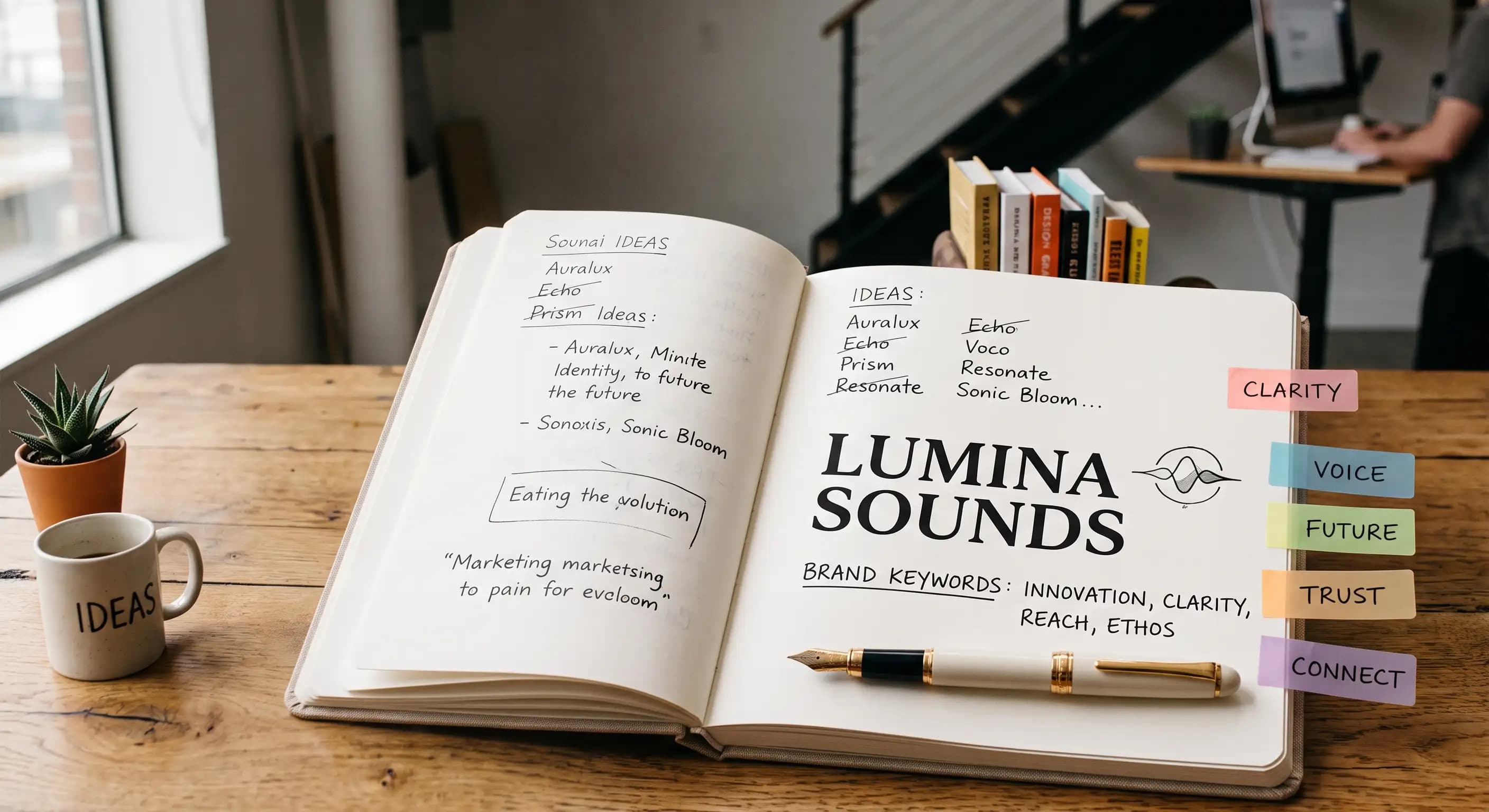
Start with what the business actually does. Then draft names a stranger can spell after hearing once. Check how it sounds, how it searches, and whether a nearby company already owns it. A generator can fill a list. It cannot tell you the name is free to use.
Write the job before the word
If you cannot say what you sell without the name, the name is doing too much. Write: “We help ___ do ___.” If that sentence needs a paragraph, the business is not ready to name. Naming cannot fix a muddy offer. It can only label a clear one.
List the rooms the name will enter: invoices, voicemail, app store, truck door, word of mouth from a tired customer. A name that looks clever on a mood board can fail in those rooms. Rooms first. Clever second.
Decide whether you need a name that can expand. A shop called North Window Repair is honest and weak if you later sell doors in three cities. A coined word can travel. A descriptive name can rank. Pick the trade. Do not pretend you get both for free.
The five tests
- Radio: say it once. Can a stranger type it?
- Empty room: would you say it to a skeptical customer?
- Search: exact phrase plus your industry.
- Neighbor: similar marks in the same city or category.
- Future: does it still fit a second product?
Fail any test on purpose only if you can pay the cost. A hard spelling can work for a fashion line with a huge ad budget. It is a bad idea for a plumber who lives on referrals. Match the name to the marketing you can actually do.
Name types and the bill they send later
| Type | Strength | Bill |
|---|---|---|
| Descriptive | Clear on first hearing | Hard to protect |
| Metaphor | Room to grow | May collide in ads |
| Coined | Ownable if cleared | You must teach it |
| Founder | Trust and simplicity | Awkward on a sale |
Domains, handles, and the spam look
A perfect .com is nice. It is not the business. Do not add hyphens and digits just to win a URL. That looks like a phishing page. A clean two-word .com, a honest country domain, or a new generic that you can say is better than a junk string.
Handles should follow the brand, not the other way around. If the only available Instagram is a mess, that is a clue the name is crowded. See username ideas that still read as you for handle patterns that still look human.
Legal work is not optional
This site does not give legal advice. Trademark offices, common-law use, and confusing similarity are real systems. Budget money for a search in your country. A weekend Google search is a start, not a finish. If someone already uses the name on the same goods, walking away is cheaper than a letter later.
Founder names and ego
Your surname is honest. It can also freeze the brand to one person. If you might hire, franchise, or sell, test a name that can travel without you. If you mix two founder names, use the name mixer, then run the same five tests. A mashup that only the couple loves is a couple name, not a company.
Teams and studios can use the team name generator when the identity is a crew. That is a different cheer. It is still a brand if you print it on invoices. Do not skip search because the league felt casual.
A one-week sequence
Day one: sentence and rooms. Day two: fifty names from paper and a generator. Day three: cut to ten with the radio test. Day four: search the ten. Day five: say the survivors to three customers. Day six: pick two. Day seven: start legal search on the winner and keep one backup. Stop generating after day two. More options after that are delay.
If you cannot pick, you are probably protecting a fear. Name the fear. If it is “what if we get bigger,” choose the expandable name. If it is “what if nobody understands us,” choose the clearer name. You rarely get a third fear that is actually about letters.
Spelling tricks
Dropped vowels and extra y’s look like 2012 startups. They fail in voice search. If you alter spelling, change one thing. Never replace letters with numbers in a company people must call. Customers will invent their own spelling, and you will miss mail.
Foreign words you do not speak are a risk. Check meaning, slurs, and religious use. A cheap translation is how brands become memes. If the word is not yours, get a native speaker, or invent.
When the name is good enough
A name is good enough when it passes the tests and you can say it without a wince. It does not need to thrill you every morning. Products thrill. Names should disappear into use. If you are still hunting for a feeling, build the product.
A generator can draft a list. It cannot pass the tests for you. Use the brand-name tool for options, then come back and say them, search them, and check them. Tests are the craft.
Partners, investors, and vetoes
If two founders cannot say the same name with a straight face, do not paper over it with a logo. The one who hates it will sabotage the voicemail. Give each person one veto, no speech. If both veto the same list, the list is wrong, not the people. Draft a new batch with a tighter sentence about the customer, not about taste.
Investors may want a name that sounds like a category winner. Customers may want a name they can text. You need both, but the customer pays first. A name that only impresses a pitch room is a costume. Costumes come off. Then you still need a word for the receipt.
Renaming later
Renames are possible and expensive. Domains, invoices, packaging, and memory all move at different speeds. If you must rename, keep a bridge: “Elm Oven, now Ovenly” for a season. Do not pretend the old name never existed. Search engines and old customers still have it. A clean 301 and a plain explanation beat a mysterious rebirth.
If the reason for a rename is a legal letter, listen to counsel. If the reason is boredom, build a product instead. Boredom is not a naming emergency. It is a calendar with too much white space.
A standard you can reuse
Write the sentence. Draft. Radio. Search. Neighbor. Future. Stop. That is the whole method. Generators sit in Draft. They do not sit in Stop. If you remember only one line: a brand name is a tool other people have to use without you in the room.
Category words and app stores
App stores punish names that are only a generic category: “Fast Chat,” “Best Notes.” They also punish names that impersonate a giant. Read the store’s naming rules before you fall in love. A generator does not read those rules. A person on your team must. If you sell in more than one store, test the name in both. A name that is free in one listing can be blocked in another.
If you operate in two languages, run the radio test in both. A proud English coinage can be a bathroom word elsewhere. You will not catch every case. You can catch the cheap cases with a native speaker and ten minutes. That is cheaper than a relaunch.
The last filter
Print the name on a one-page mock invoice and a one-line voicemail script. Live with those two artifacts for a day. If you still like the word, it is probably a brand. If you only like it in a mood board, it is still a sketch.
Co-brands and acquisitions
If you might merge, avoid a name that only works next to your ego. A flexible word survives a hyphen with another company. A joke name does not. Think about the press release you would hate to write. If that release is impossible because the name is a punchline, you already know the answer.